

A white crust around the faucet. A shower door that looks cloudy an hour after you cleaned it. Spots on the windows right where the sprinklers hit. If you live in the East Valley, you know hard water.
Our water carries a heavy load of dissolved minerals. In Chandler, for example, the city reports hardness ranging from 5 to 20 grains per gallon, averaging 16.5. Add our dry air, which evaporates water fast, and those minerals get left behind on every surface water touches.
What hard water stains are
When a drop of water dries, the calcium and magnesium in it stay put. One drop is easy to wipe off. Hundreds of drops layered over weeks bond into a hard, chalky film that ordinary cleaners slide right over.
Left long enough on glass, mineral deposits can etch the surface itself. Etching is permanent damage, not a stain, which is why it pays to stay ahead of buildup.
Where it shows up most
- Shower glass, tile and fixtures
- Faucets, showerheads and aerators
- Rings inside toilet bowls
- Exterior windows in the path of sprinklers
- Sinks and dishwasher interiors
- Grout lines around tubs and showers
How to remove light buildup yourself
- Glass and tile: mix white vinegar and water half and half. Spray, let it sit 5 to 10 minutes, wipe with a non-scratch pad, rinse and dry.
- Faucets and showerheads: wrap a vinegar-soaked cloth around the fixture for 15 to 30 minutes, then scrub gently with a soft brush and rinse.
- Toilet rings: pour in vinegar, let it sit, then scrub with a toilet brush.
Be careful with:
- Natural stone. Never use vinegar or other acidic cleaners on marble, travertine or granite. Acid can etch stone.
- Abrasives. Steel wool and scouring powder scratch glass and fixture finishes.
- Mixing products. Never mix cleaners, and never combine bleach with vinegar or other acids.
How to keep it from coming back
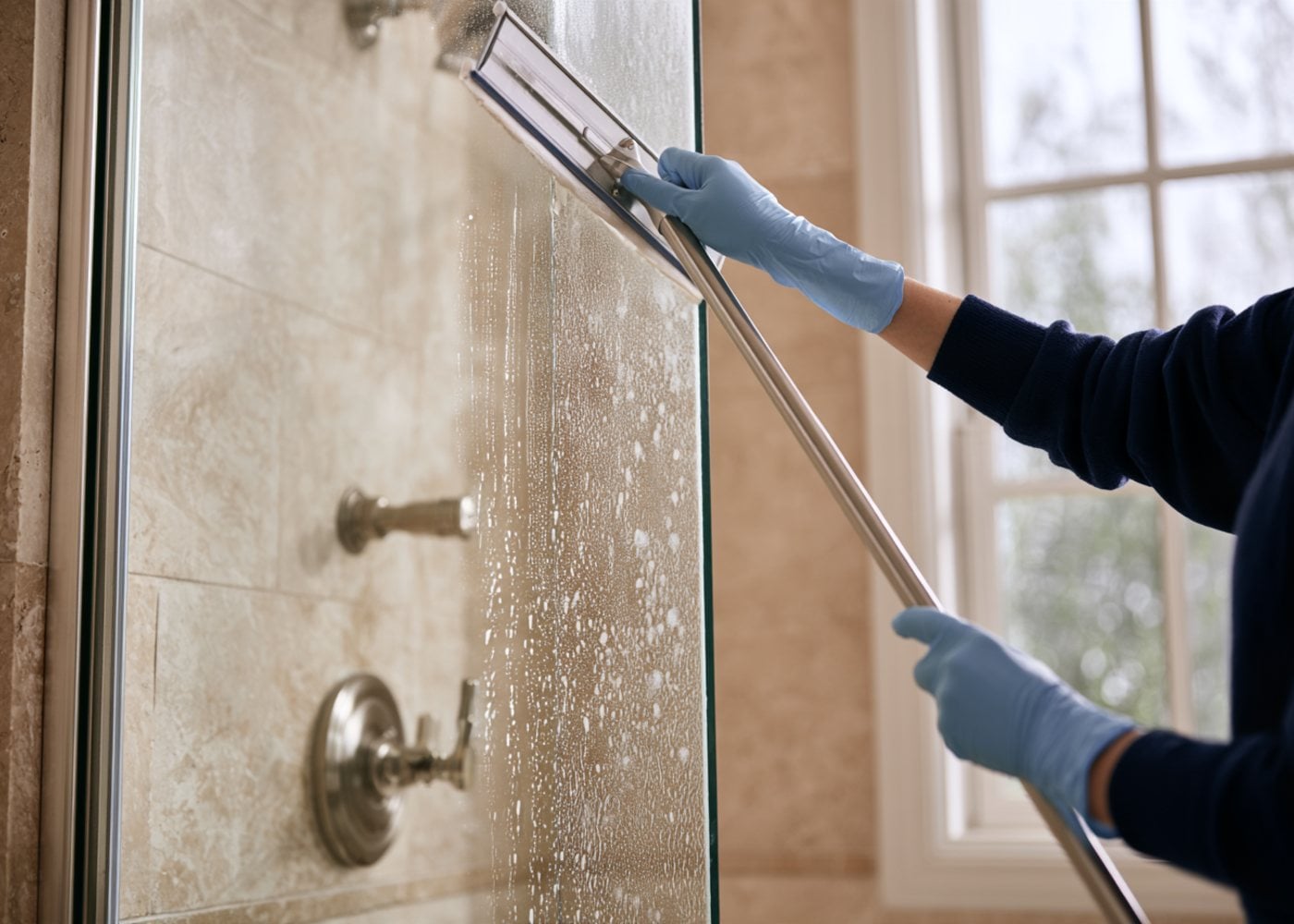
- Squeegee shower glass after every shower. It takes 30 seconds and prevents most buildup.
- Wipe faucets and sink edges dry at the end of the day.
- Adjust sprinklers so they do not spray windows. This is one of the most common causes of spotted glass we see in East Valley neighborhoods.
- Keep cleaning on a schedule, so minerals never get the chance to layer.
When to call a pro
Windows. Our window cleaning covers inside and outside glass, screens and tracks, with care for hard water spots. If rain hits soon after, rain touch-ups are available within 48 hours. We recommend quarterly window cleaning in the East Valley to stay ahead of spotting.
Showers and bathrooms. Showers, tubs, sinks, faucets and mirrors are on every house cleaning checklist. For heavier buildup, add heavy duty time to your visit.
Tile and grout. Mineral residue and soap scum dull grout lines. Tile and grout cleaning uses agitation and extraction, with optional sealing to help keep grout clean longer.
We will always be honest about results. If glass is already etched, cleaning will improve it but may not make it look new, and we will tell you that before we start.
Hard water FAQs
Is hard water bad for my health?The City of Chandler notes that most health officials do not consider water hardness a health concern. It is a cleaning and appliance problem, not a drinking water problem.
How often should I clean my windows in the East Valley?We recommend quarterly. Spots left for months become harder to remove and can eventually etch the glass.
Can hard water stains be permanent?Yes. Deposits left on glass long enough can etch it. Regular cleaning prevents most of that damage.
We fight hard water across Chandler, Gilbert, from Power Ranch to Seville, Mesa and the rest of the East Valley. See all our service areas, get a free quote online or call 480-807-4306. New customers get 2 cleaners for 2 hours for $166 with the new customer special.